
What Does It Mean to Dream About Hallucinations seeing things? Deep Interpretation
Direct Answer
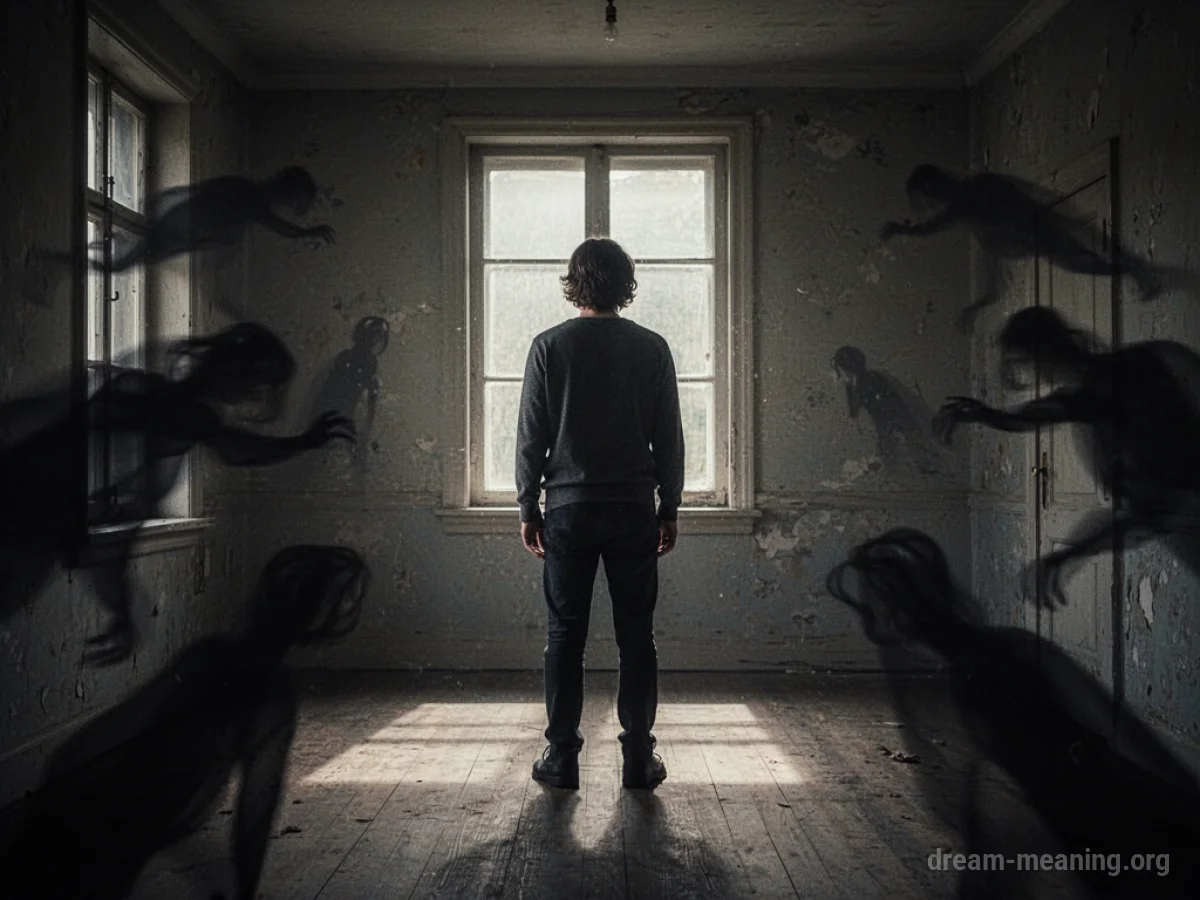
From an emotional perspective, the act of having hallucinations in the dream of Hallucinations seeing things reflects a profound questioning of your own perceptions and a disconnect from objective reality. It’s your psyche grappling with the very foundation of how you understand the world around you, often leading to feelings of confusion and unease.
FAQ: Interpreting Hallucinations seeing things
❓ What does it mean when you dream about having hallucinations and seeing things that aren’t there?
It signifies a deep internal state where your mind is actively distorting sensory input. This isn’t about external threats, but rather your internal landscape blurring the lines between what is real and what your mind is creating, causing confusion.
❓ Why would my dream show me hallucinations if I don’t experience them in waking life?
Dreams often use extreme metaphors. Dreaming of hallucinations is a powerful way for your subconscious to highlight a fear of not being able to trust your own senses or a current situation where your understanding of reality feels unstable.
What Is the Spiritual Meaning of having hallucinations?
✨ Spiritually, dreaming of hallucinations can be seen as the universe gently nudging you to examine the energetic currents you’re attuned to. It suggests that your intuition might be picking up on subtle shifts, but the way you’re processing this information is becoming distorted, leading to a feeling of unease about your spiritual path or the messages you’re receiving.
🧠 Psychologically, this spiritual message translates directly into your internal state: you are questioning the validity of your own sensory experiences and perceptions. Your mind is trying to make sense of something that feels “off,” and the dream uses the vivid imagery of hallucinations to underscore this internal confusion.
The Hidden Message Behind Your Dream
The core of dreaming about having hallucinations is the fundamental act of perceiving reality inaccurately. This isn’t a passive observation; it’s an active internal process where your mind is generating false sensory data. It’s about the integrity of your internal compass.
This variant specifically highlights the distortion of sensory input. Think of it like a funhouse mirror for your mind. It points to a potential fear that you’re losing touch with objective truth, or that external pressures are making it difficult to trust your own judgment and sensory data.
The Key Difference of This Variant
While dreams about madness can represent general mental turmoil, the specific act of having hallucinations in this dream variant emphasizes the distortion of sensory input, suggesting a disconnect from objective reality or a fear of being unable to trust one’s own perceptions.
📜 Ancient texts and religious traditions often speak of divine visions or deceptive illusions. While not directly about modern psychological hallucinations, the concept of perceiving reality inaccurately carries a timeless moral. It cautions against being misled by false prophets or internal biases that lead one astray from truth. The unease you feel in the dream mirrors the spiritual unease one might experience when their faith or understanding is challenged by deceptive appearances.
Similar Symbols You Might Dream About
- Dreaming of a distorted or warped landscape – Suggests a general sense of things not being right, but less focused on specific sensory input.
- Dreaming of being lost or unable to find your way – Points to a feeling of disorientation and a lack of clear direction in waking life.
🔄 If you keep dreaming about having hallucinations, it’s a strong signal that your subconscious is trying to draw your attention to a persistent issue. This repetition is driven by the unresolved confusion and unease surrounding your perceptions. You might be avoiding a truth or struggling to reconcile conflicting information, and your mind is insisting you confront this lack of clarity.
💡 To navigate the feelings of questioning the validity of your own sensory experiences, try grounding techniques. In your waking life, actively seek objective feedback from trusted sources. Journaling about your perceptions can also help you differentiate between subjective feelings and external facts.
🚀 The next step is to address the underlying confusion and unease. This might involve open communication with those involved in a confusing situation, or seeking professional guidance to help you re-establish trust in your own judgment and perception of reality.
Scenarios and Contexts Guide
| Dream Detail | Interpretation |
|---|---|
| Seeing familiar people as distorted or alien | This points to a deep-seated confusion about relationships or a fear that the people you know are not who you think they are. |
| Objects appearing and disappearing randomly | Highlights a feeling of instability and unpredictability in your life, where things you rely on seem to vanish without reason. |
| Trying to dismiss or ignore the hallucinations | Indicates a resistance to acknowledging the inner turmoil or a denial of the fact that your perceptions are currently unreliable. |
Balance of Signs: Positive vs. Negative
While dreams of hallucinations can be unsettling, they are not inherently negative omens. They are powerful indicators of your internal state.
- Positive Side: ✨ This dream is an opportunity for profound self-awareness. By confronting these distorted perceptions, you can gain clarity, strengthen your intuition, and learn to discern truth from illusion more effectively. It’s a catalyst for growth.
- Negative Side: ⚠️ The primary risk is succumbing to the confusion and unease, leading to poor decisions based on faulty perceptions. It can also foster anxiety and a loss of self-trust if not addressed.
Key Takeaways
Dreaming of hallucinations is a potent symbol of perceiving reality inaccurately, directly tied to the act of having hallucinations. It signals a critical moment of questioning your own senses and facing a potential disconnect from objective truth, urging you to seek clarity and re-establish trust in your perception.
