
Interpretation of Dreaming About Dream about taking many pictures: Detailed Guide
In Short
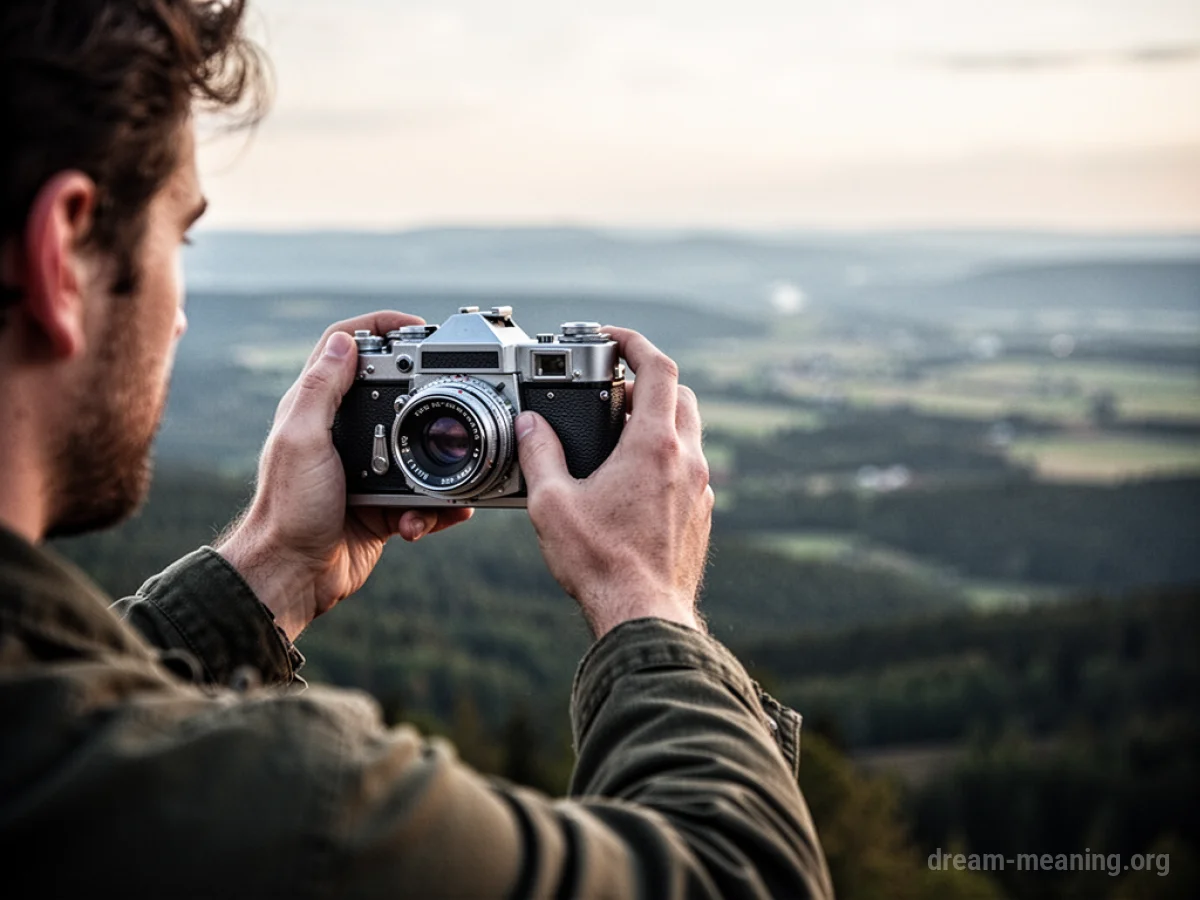
In analytical terms, dreaming of Taking many pictures and experiencing taking many pictures represents an intense subconscious effort to capture, document, and control fleeting experiences and memories. This repeated action highlights a profound internal state of attempting to capture and preserve experiences, often driven by a palpable sense of anxiety and vigilance.
Balance of Signs: Positive vs. Negative
This dream is primarily an alert, signaling underlying anxieties that require attention, rather than a purely positive omen.
- Positive Side: ✨ While rooted in anxiety, the impulse to document can also signify a deep appreciation for life’s moments and a desire to learn from them. It shows a commitment to understanding your journey.
- Negative Side: ⚠️ The overwhelming vigilance and anxiety inherent in repeatedly taking pictures suggest a fear of loss or a feeling of being overwhelmed, potentially hindering your ability to be present in the moment.
Psychological Present
Your dream about taking many pictures is a direct manifestation of your current internal drive: attempting to capture and preserve experiences. It’s as if your subconscious is trying to freeze-frame moments of your life, ensuring they aren’t lost or altered.
This persistent action of photographing suggests a deep-seated need for certainty and control over your memories and the narrative of your life, which can significantly impact your present decision-making by making you overly cautious.
“The lens of the dream camera is focused on the fear of impermanence, urging us to hold on too tightly.”
The Spiritual Significance of This Dream
✨ Spiritually, dreaming of taking many pictures can be interpreted as a message from the universe about an energetic shift. It suggests that you are being called to pay closer attention to the subtle energies and lessons within your experiences, but the repetitive action indicates you might be trying to grasp these lessons too concretely, rather than allowing them to integrate naturally.
🧠 This spiritual nudge to observe is being filtered through your psychological lens of attempting to capture and preserve experiences, leading to the anxiety and vigilance that colors your dreamscape.
Different Interpreted Situations
| Dream Detail | Interpretation |
|---|---|
| Taking pictures frantically of a specific event | This highlights an intense anxiety and vigilance around a particular situation, showing a desperate need to document every detail to ensure you don’t miss anything or lose control of its meaning. |
| Taking pictures of mundane, everyday objects | This suggests a subconscious effort to find meaning and permanence in the ordinary, indicating a broader struggle with attempting to capture and preserve experiences even when they seem insignificant. |
| Reviewing the many pictures taken immediately after | This reveals a need for immediate validation and control over the captured moments, underscoring the anxiety and vigilance associated with the preservation process itself. |
Dream Cluster: Picture
- Dreaming of a blurry photograph – Suggests a lack of clarity or a distorted perception of past experiences and memories.
- Dreaming of taking a single, perfect photograph – Indicates a desire for idealization and control over how experiences are remembered, often a contrast to the anxiety of taking too many.
Questions for Self-Reflection
- Self-awareness: What specific experiences do I feel an overwhelming urge to document or control, and why?
- Management: How can I better manage my feelings of anxiety and vigilance so that I can be more present in my daily life?
What Makes This Dream Unique
While pictures in dreams often relate to memory and perception, the sheer act of Taking many pictures specifically points to a more active, and perhaps desperate, engagement with this process. The nuance here is that the act of repeatedly photographing suggests a need to hold onto moments, perhaps due to a fear of forgetting or a desire for preservation, rather than simply recalling them.
The Hidden Message Behind Your Dream
The core message revolves around the mechanism of taking many pictures as a coping strategy. Your psyche is employing this action to combat a perceived threat to memory or experience, indicating a deep-seated belief that external documentation is the only way to safeguard what matters.
This translates to an internal conflict: the desire for authentic experience versus the fear of its ephemeral nature. The dream urges you to examine whether your attempting to capture and preserve experiences through constant documentation is actually hindering your ability to truly live and integrate them.
Practical Next Steps
💡 To address the underlying drive of attempting to capture and preserve experiences, practice mindfulness. Engage fully in one activity at a time, focusing on sensory details rather than the urge to document. Journaling your feelings *after* an experience, rather than obsessively photographing it during, can also be a powerful tool.
🚀 To manage the anxiety and vigilance, consciously practice letting go. Choose one moment each day to simply observe without the need to capture it digitally or mentally. Trust that your mind and heart are capable of holding onto what is truly important.
Why Do I Keep Dreaming About Taking many pictures?
🔄 This dream likely recurs because the underlying issues of anxiety and vigilance are not being fully addressed in your waking life. Your subconscious is repeatedly presenting the action of taking many pictures as a symbol of this unresolved internal struggle, signaling that the message about the need for presence and acceptance, rather than control, has not yet been heard.
Key Takeaways
Dreaming of taking many pictures is a powerful symbol of your conscious and subconscious efforts in attempting to capture, document, and control experiences and memories. This persistent action, fueled by anxiety and vigilance, calls for a re-evaluation of how you engage with the present moment and the impermanence of life.
