
Interpretation of Dreaming About Dream about stranger in childhood home: Detailed Guide
The Core Meaning
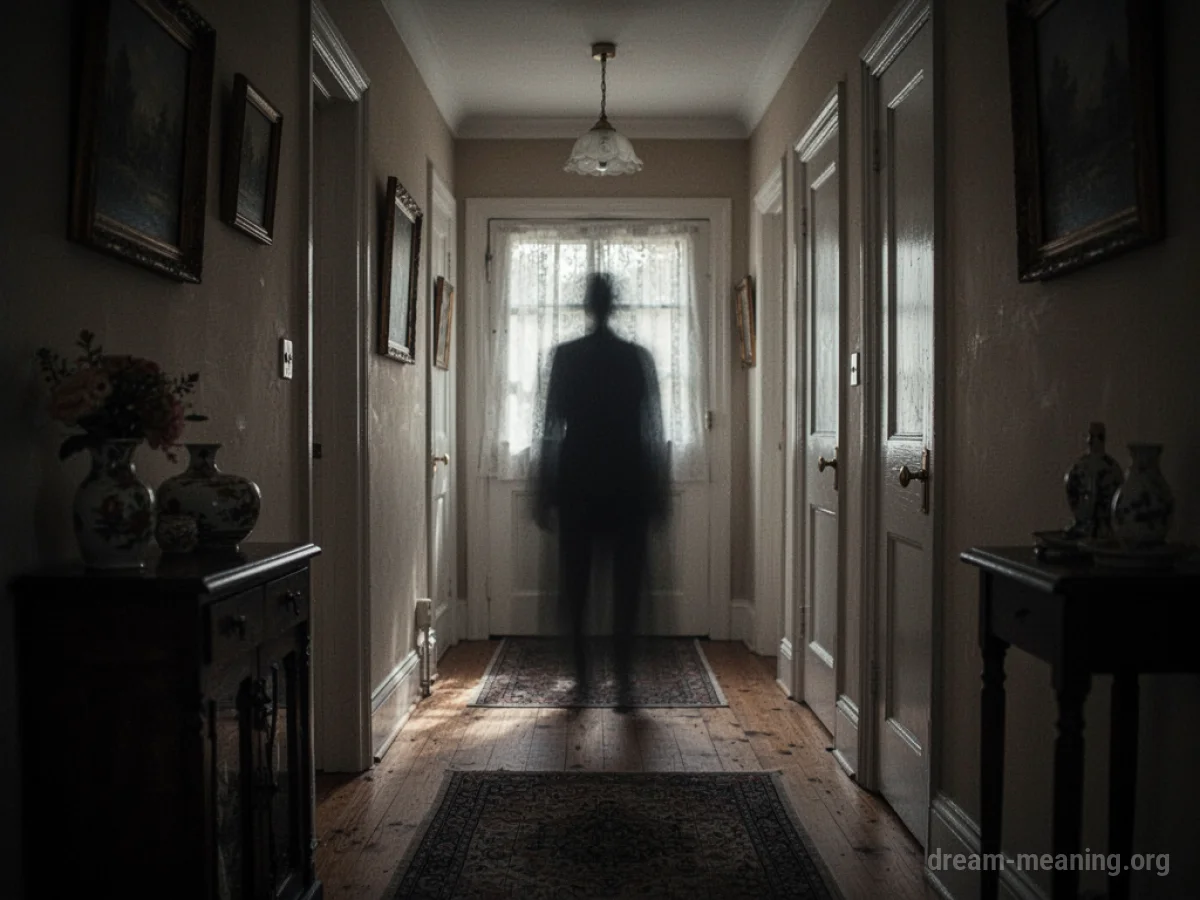
The core meaning of Dream about stranger in childhood home (specifically the action of stranger in childhood home) suggests that an unknown element is intruding upon or changing your sense of past identity. This often reflects a feeling that unfamiliar influences are altering your deeply held perceptions of your origins and your past self.
Common Variations
| Dream Detail | Interpretation |
|---|---|
| The stranger is hostile or frightening. | This highlights a strong internal conflict or a deep-seated fear that these unfamiliar influences are damaging your sense of self or disrupting your past foundations. |
| You try to communicate with the stranger. | This indicates an active, though perhaps tentative, effort to understand or integrate these new elements that are challenging your perception of your origins and past self. |
| The stranger is a familiar person acting strangely. | This can point to a perceived change in someone from your past, or how you now view a familiar aspect of yourself, creating a sense of intrusion and unfamiliarity regarding your history. |
The Spiritual Significance of This Dream
✨ Spiritually, a stranger in your childhood home can signal an upcoming spiritual awakening or an energetic shift that is inviting you to re-evaluate the blueprints of your soul. It’s as if the universe is sending a message, through this unexpected guest, that your foundational beliefs and origins are being illuminated for a higher purpose.
🧠 Psychologically, this spiritual nudge often manifests as a feeling that unfamiliar influences are altering your sense of past identity. Your intuition is picking up on subtle or profound changes, prompting you to acknowledge that what once felt solid and known about your past self is now being viewed through a new, perhaps more evolved, lens.
Introspection Guide
- Self-awareness: In what areas of your life are you currently experiencing an unknown element intruding upon or changing your sense of past identity, and how does this manifest in your present perceptions?
- Management: How can you acknowledge and process the intrusion and unfamiliarity brought by these new influences without feeling overwhelmed or invalidated in your personal history?
💡 To navigate the feeling that unfamiliar influences are altering your sense of past identity, begin by gently journaling about your childhood memories and the emotions attached to them. Compare these reflections with your current values and beliefs. This practice can help you distinguish between genuine personal growth and the unsettling feeling of unfamiliarity.
🚀 To address the emotion of intrusion and unfamiliarity, consider practicing mindful observation. Notice these new influences without immediate judgment. You might find that what feels strange at first is actually an invitation from your higher self to integrate a more expansive version of who you are, rather than a threat to your past self.
Deep Dive Into the Symbolism
The act of a stranger in your childhood home is a potent symbol. Your childhood home represents the foundational aspects of your psyche, your earliest conditioning, and the very roots of your identity. When a stranger enters this intimate space, it is not necessarily about an external threat, but rather an internal one—or rather, an internal evolution.
This scenario directly points to an identity shift where unfamiliar influences are making their presence known. These influences can be new perspectives, undeveloped aspects of your own personality, or even societal shifts that are challenging your established narrative of your past self. The intrusion feels personal because it’s happening in the very place that symbolizes your earliest, most authentic self.
Explore Related Dreams
- Dreaming of a stranger in your current home – This often signifies current life challenges or new aspects of yourself emerging in your present reality.
- Dreaming of your childhood home being empty or abandoned – This can indicate a feeling of disconnection from your roots, a loss of innocence, or a sense of being adrift from your origins.
Key Details That Change the Interpretation
- Your emotional reaction: Were you fearful, curious, or indifferent? Your immediate feeling towards the stranger colors whether these new influences are perceived as threatening or potentially beneficial.
- The visual environment: Was the stranger disrupting the familiar decor, or were they seamlessly blending in? This detail can suggest the degree to which these new elements feel like a violation versus a natural integration into your sense of self.
Common Questions About This Dream
❓ What does it mean when you dream about a stranger in your childhood bedroom specifically?
If the stranger is in your childhood bedroom, it often points to a highly personal aspect of your past self being affected. This could relate to your early sense of self, your innocence, or fundamental beliefs formed during that time.
❓ Could the stranger represent a part of myself I don’t recognize?
Absolutely. This is a very common interpretation. The stranger in your childhood home can embody an unfamiliar influence that is actually an undeveloped or unacknowledged facet of your own personality, pushing for integration.
The Key Difference of This Variant
While dreams about homes generally represent aspects of the self, the specific action of a stranger in the childhood home brings a unique and potent meaning: A stranger in the childhood home suggests that unfamiliar influences or aspects of yourself are entering and altering your perception of your origins and past self. This isn’t just about a general sense of self, but a direct engagement with how your foundational identity is being perceived and potentially reshaped.
Final Thoughts
Dreaming of a stranger in your childhood home is a powerful signal that your sense of past identity is undergoing a profound, albeit perhaps unsettling, transformation. Embrace this moment as an opportunity to understand the evolving landscape of your inner world.
